



| Detail | Information |
|---|---|
| Full Name | Susan “Sue” Rodham Sylvester |
| Character Type | Fictional television character |
| Series | Glee |
| Portrayed By | Jane Lynch |
| Creators | Ryan Murphy, Brad Falchuk, Ian Brennan |
| First Appearance | “Pilot” |
| First Aired | May 19, 2009 |
| Final Appearance | “Dreams Come True” |
| Original Network | Fox |
| Main Role | Cheerleading coach |
| School | William McKinley High School |
| Cheerleading Team | The Cheerios |
| Family | Doris Sylvester, Jean Sylvester, Robin Sylvester |
| Marriage | No confirmed marriage |
| Net Worth | Not applicable; fictional character |
| Notable Achievement | Multiple fictional cheerleading championships |
| Cultural Legacy | Iconic TV antagonist and meme character |
The character information comes from Glee records and contemporary coverage.
- Who Is Sue Sylvester?
- Sue Sylvester’s Early Character Development
- Career and Major Achievements
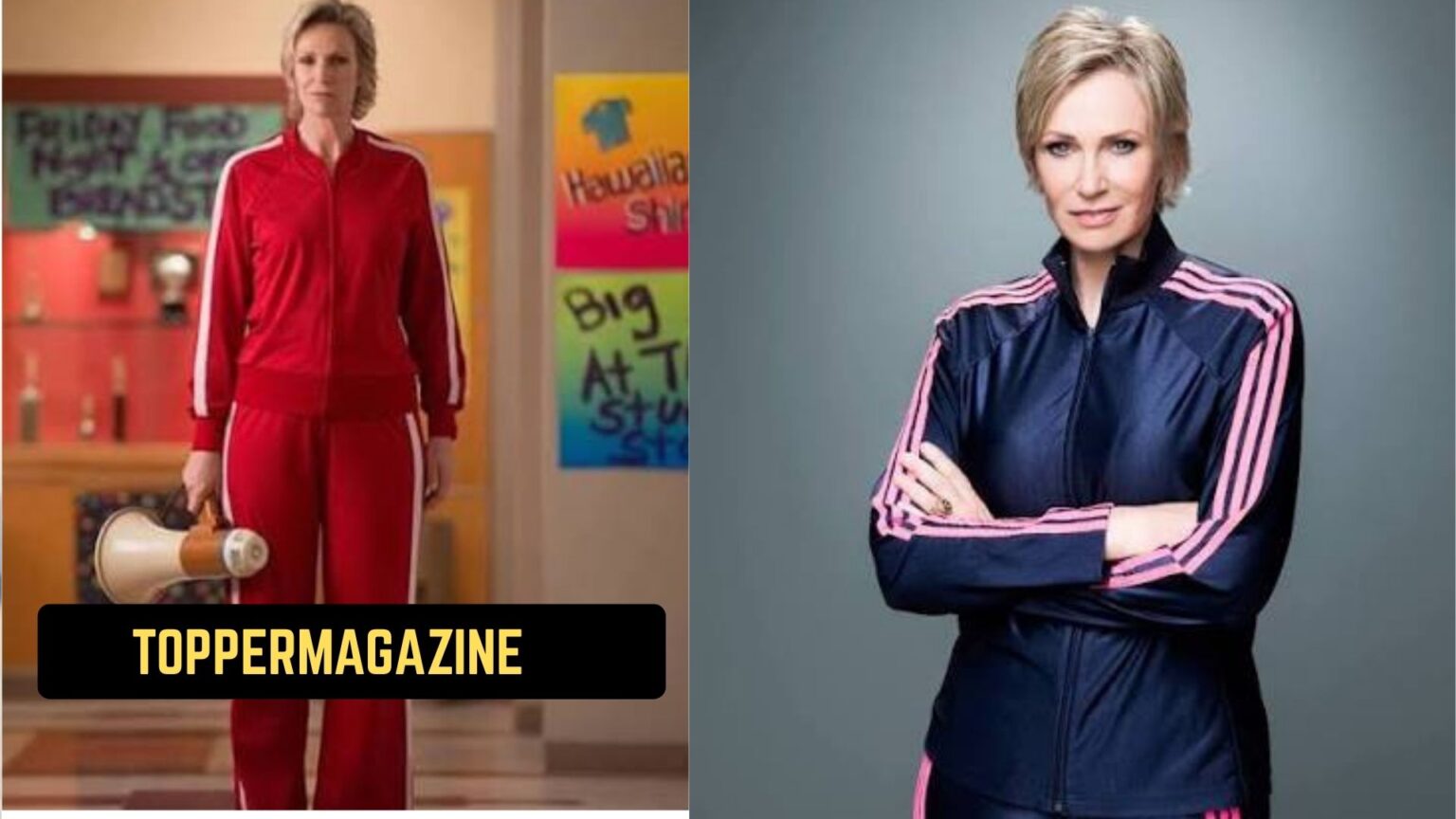
- The Track Suit Became Part of the Character
- Sue Sylvester and Jane Lynch
- Sue Sylvester’s Family and Personal Life
- Sue Sylvester’s Net Worth
- Cultural Impact and Lasting Legacy
- Where Sue Sylvester’s Story Ends
- Final Verdict
Who Is Sue Sylvester?
Sue Sylvester is a fictional character from Glee.
Jane Lynch played her throughout the series.
Sue works at William McKinley High School.
Her main role involves coaching the Cheerios.
Sue quickly becomes the glee club’s biggest opponent.
She constantly clashes with teacher Will Schuester.
Their rivalry creates many of the show’s comic moments.
The Peabody Awards also highlighted their verbal battles.
Unlike traditional villains, Sue rarely hides her ambition.
She wants power, recognition, and winning above almost everything.
That direct personality makes her unusually easy to understand.
Her cruelty also creates much of the show’s comedy.
Sue Sylvester’s Early Character Development
Sue’s background gradually expands throughout Glee.
The show reveals a more vulnerable side later.
Her sister Jean becomes especially important to her story.
This relationship adds emotional depth to Sue’s character.
Sue also develops connections with several students.
Her relationship with Becky Jackson shows unexpected compassion.
That contrast prevents Sue from becoming completely one-dimensional.
She can be cruel and protective in different moments.
Why Her Character Works
Sue’s appeal comes from her contradictions.
- She behaves like a ruthless antagonist.
- She also shows genuine loyalty.
- She constantly seeks control.
- She sometimes protects vulnerable people.
- Her insults often become comic set pieces.
This combination gives the character more range.
She remains unpredictable without losing her core personality.
Career and Major Achievements
Sue begins Glee as the Cheerios coach.
The Cheerios are McKinley High’s competitive cheerleading squad.
She treats their success as a personal mission.
She also sees the glee club as a threat.
Her rivalry with Will becomes a recurring storyline.
She repeatedly attempts to undermine his glee club.
Sometimes she succeeds through manipulation and school politics.
Other times her plans create unexpected problems.
Sue’s professional roles eventually expand beyond cheerleading.
She becomes principal at McKinley High School.
The character later moves through several unusual career turns.
Her storyline ultimately reaches American national politics.
By the series finale, Sue becomes Vice President.
That ending reflects the show’s intentionally exaggerated storytelling.
It also completes her obsession with power and status.
The Track Suit Became Part of the Character
One overlooked detail involves Sue’s clothing.
Her track suit is more than a costume choice.
It became closely associated with her television identity.
The Smithsonian now preserves one of her jackets.
Jane Lynch wore it during Glee‘s sixth season.
The Smithsonian describes the garment as a brown synthetic jacket.
It features red stripes along the arms.
The item appeared in the episode “Loser Like Me.”
It aired on January 9, 2015.
This offers a useful perspective on Sue’s legacy.
Her visual identity became recognizable beyond individual episodes.
The track suit effectively became part of her character branding.
That makes the costume historically interesting in television culture.
Sue Sylvester and Jane Lynch
Jane Lynch’s performance transformed Sue into a television standout.
Lynch already had extensive acting experience before Glee.
Her earlier credits included film and television comedy.
Sue, however, brought her wider mainstream recognition.
The role earned major industry recognition for Lynch.
She won an Emmy for portraying Sue.
She also received a Golden Globe for the role.
Her performance became central to the show’s identity.
The Screen Actors Guild also recognized Glee’s ensemble.
Jane Lynch appears in the show’s credited cast.
The series won Outstanding Performance by an Ensemble.
That award reflected the strength of its large cast.
Why Jane Lynch Made Sue Different
Lynch avoided playing Sue as a simple monster.
She gave the character comic timing and vulnerability.
Her delivery made even harsh dialogue entertaining.
That balance helped Sue remain watchable for years.
Lynch later said she would revisit Sue.
She described the character as a major part of her career.
She also imagined how an older Sue might behave.
That shows the role’s lasting personal significance.
Sue Sylvester’s Family and Personal Life
Sue’s fictional family receives limited attention in Glee.
Her mother is identified as Doris Sylvester.
Her sister Jean Sylvester plays an important emotional role.
Sue also becomes the mother of Robin Sylvester.
There is no reliable basis for treating Sue as real.
Therefore, real-world marriage records do not apply.
Her fictional relationships belong to the show’s storyline.
They should not be confused with Jane Lynch’s biography.
Important privacy note: Sue Sylvester has no real birth record.
Her exact real-world birthplace therefore does not exist.
Likewise, she has no personal bank account or net worth.
Online figures claiming otherwise should be treated cautiously.
Sue Sylvester’s Net Worth
Sue Sylvester does not have a real net worth.
She exists only within the fictional Glee universe.
Any dollar amount attached to her would be speculative.
The series does portray her as financially ambitious.
Jane Lynch’s finances are a separate subject entirely.
They should never be presented as Sue’s wealth.
This distinction matters when researching celebrity-related keywords.
A fictional character and actor require separate fact-checking.
Cultural Impact and Lasting Legacy
Sue’s impact extends beyond the original television episodes.
Her quotes became widely shared online.
Her image also became a popular reaction meme.
Her aggressive personality helped create memorable internet content.
Her influence also reflects Glee’s broader success.
The series won the 2009 Peabody Award.
The award praised its humor and emotional storytelling.
It specifically mentioned Sue and Will’s memorable conflicts.
That recognition gives Sue an interesting cultural position.
She was not simply a school villain.
She became part of the show’s broader identity.
Her personality helped balance drama with sharp comedy.
Where Sue Sylvester’s Story Ends
Glee ended its television run in 2015.
The finale revealed Sue’s surprising political achievement.
She had become America’s first female Vice President.
Becky Jackson also remained connected to her story.
The ending fits Sue’s exaggerated personality perfectly.
She spends the series chasing influence and victory.
Her final position represents the ultimate version of that ambition.
It also gives the character an intentionally absurd conclusion.
Final Verdict
Sue Sylvester remains memorable because she breaks simple villain rules.
She is aggressive, ambitious, funny, and occasionally compassionate.
Jane Lynch’s performance gave those contradictions real personality.
Her track suit became an enduring visual symbol.
Most importantly, Sue is a fictional character.
Her biography belongs to Glee, not real-world celebrity records.
That distinction prevents many common online misinformation errors.
Her real legacy comes from television, performance, and pop culture.