

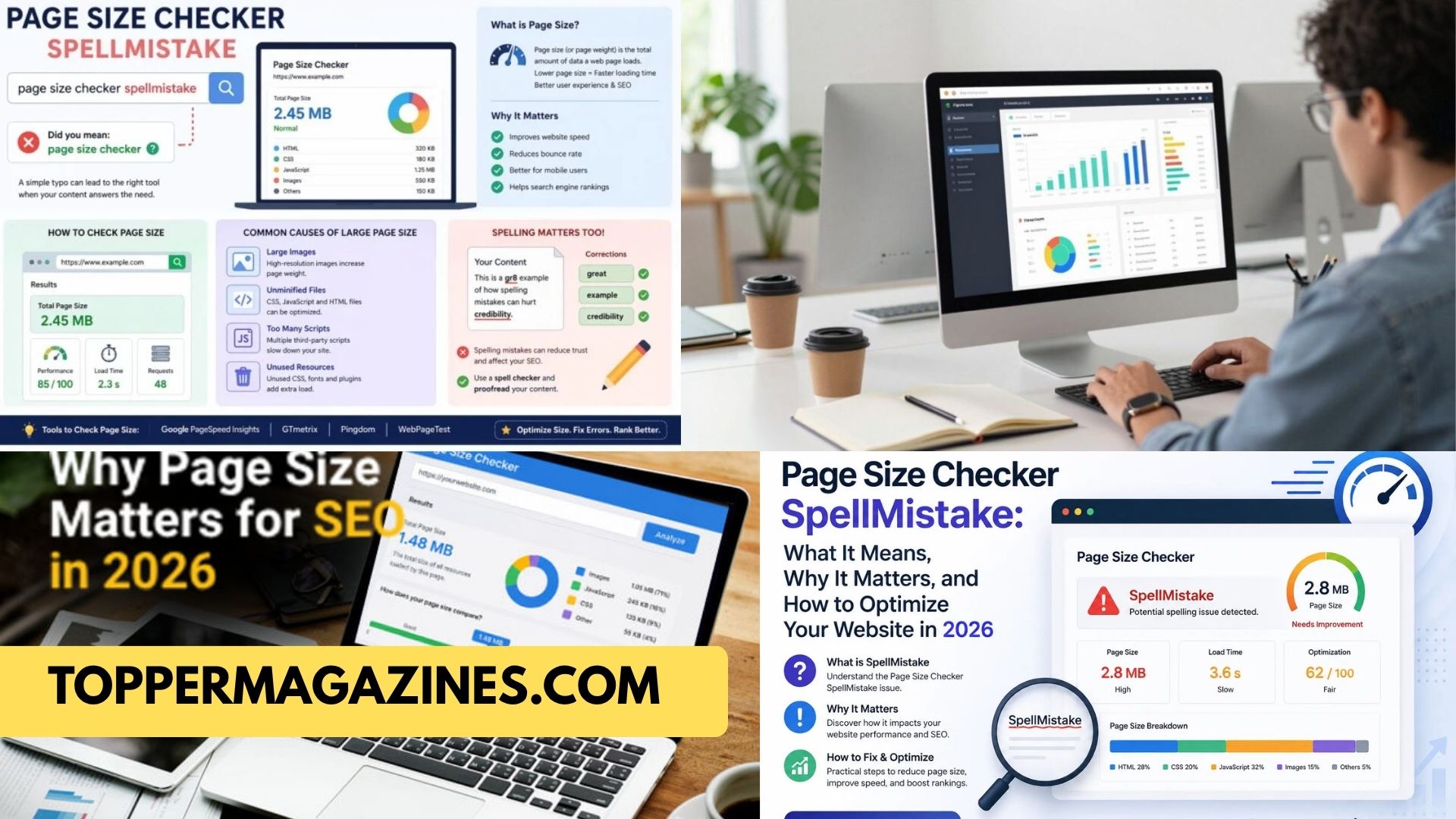
The term page size checker spellmistake may look confusing at first, but it usually comes from users trying to search for tools that check website page size and improve SEO performance. Many people type this keyword with spelling errors because they are not fully familiar with technical SEO terms. In simple words, it refers to checking how “heavy” or “light” a webpage is in terms of data size, which directly affects how fast a website loads.
Page size is an important factor in SEO because search engines like Google prefer fast-loading websites. If a page is too large, it takes more time to open, which can lead to users leaving the site quickly. This increases bounce rate and reduces ranking chances. That is why understanding page size checker spellmistake is helpful for beginners who want to improve website speed and overall user experience.
What is “Page Size Checker Spellmistake” and What Does It Mean?
The phrase itself is not an official tool name. It is a mix of keywords like “page size checker” and a misspelling of “spell mistake.” In reality, users are searching for tools that analyze website size, detect heavy files, and suggest improvements.
This search behavior shows that users want simple tools that help them understand website performance without technical knowledge. It highlights the importance of SEO tools that are beginner-friendly and easy to use.
Importance of Page Size in Website Performance and SEO Ranking
Page size plays a direct role in how quickly a website loads. A smaller page loads faster, while a larger page slows down the user experience. Google considers speed as a ranking factor, so optimizing page size can improve visibility in search results.
A slow website can also reduce user trust. When people wait too long, they often close the page and move to another site. This is why reducing unnecessary data like large images or heavy scripts is very important for better performance and SEO growth.
Understanding User Intent Behind Page Size Checker Spellmistake
When people search for page size checker spellmistake, they are usually not looking for spelling correction tools. Instead, they are trying to find a simple way to measure how big their website page is and how it affects loading speed. Many users are beginners in SEO, so they type keywords with small mistakes, but their intention is still clear—they want to improve website performance.
This kind of search intent is very common in SEO. Google understands these mistakes and still shows relevant results. That means even if the keyword is not perfectly written, the search engine focuses on meaning rather than exact spelling. This is why content optimized for intent performs better than content focused only on exact keywords.
The variations of this keyword often include phrases like page size checker tool, website size analyzer, or page speed checker. All these terms point to the same goal—checking website performance in a simple way.
What is a Page Size Checker Tool and How It Works
A page size checker tool is a simple online utility that helps users understand how heavy a webpage is. It analyzes all website elements like images, scripts, CSS files, and HTML structure. The result shows the total size of the page in kilobytes or megabytes.
These tools are very useful for SEO beginners because they turn technical data into simple reports. Instead of manually checking code, users just enter a URL and get instant results about their website performance.
| Element Type | Example | Impact on Page Size |
|---|---|---|
| Images | PNG, JPG, WebP | High impact if not compressed |
| Scripts | JavaScript files | Can slow loading time |
| CSS Files | Styling code | Medium impact |
| HTML Code | Website structure | Low to medium impact |
Understanding these components helps users identify what is making their website slow. A good page size checker spellmistake tool breaks this down clearly so anyone can understand it.
Why Page Size Matters for SEO and Speed
Page size is one of the hidden factors that decide how fast a website loads. A smaller page opens quickly, while a large page takes more time, especially on mobile devices with slower internet connections. Google prefers fast websites because they give better user experience.
When a website loads slowly, users often leave before the page even opens. This increases bounce rate, which can negatively affect SEO rankings. That is why optimizing page size is not optional—it is necessary for success in search engines.
Page speed also plays a role in conversions. If a website is selling something or collecting leads, even a 1–2 second delay can reduce results. This makes page size optimization a key part of digital growth.
Common Page Size Problems Found in Websites
Many websites have hidden issues that make them heavy without the owner knowing. One of the most common problems is unoptimized images. Large images take more time to load and increase overall page size significantly.
Another common issue is unnecessary scripts and plugins. Many websites use too many tools that load in the background and slow down performance. These extra files increase page weight without adding real value.
| Problem | Effect on Website | Solution |
| Large images | Slow loading speed | Compress images |
| Heavy scripts | Delayed rendering | Remove unused code |
| Too many plugins | Increased load time | Use only essential tools |
Fixing these issues can dramatically improve performance and reduce page size instantly.
How to Fix Page Size Issues
Improving page size starts with simple steps. The first step is optimizing images. Using modern formats like WebP and compressing files can reduce size without losing quality. This is one of the easiest ways to improve speed.
The second step is cleaning up code. Removing unused CSS and JavaScript helps the browser load the page faster. Minifying files also reduces unnecessary space and improves performance.
Another important step is using caching and CDNs. These technologies store website data in different locations so users can access it faster from anywhere in the world. This reduces load time and improves SEO results.
Best Tools and Final SEO Tips
There are many tools available that help users check page size and improve performance. These tools give detailed reports about what is slowing down a website and how to fix it. Beginners should always use tools that show simple results instead of complex data.
To get better SEO results, website owners should regularly check page size and keep optimizing it. Even small improvements can lead to better rankings over time. Consistency is more important than one-time fixes.
The keyword page size checker spellmistake reflects a real user need—simple tools that help improve website speed without technical difficulty. Understanding this need is the first step toward better SEO success.
FAQs
1. What does page size checker spellmistake mean?
Page size checker spellmistake is a keyword used by people looking for tools that measure website size and speed. It includes spelling variations but still refers to page performance analysis. It helps users find tools that show how heavy a webpage is and how to improve loading speed for better SEO results.
2. Why is page size important for SEO?
Page size is important because it directly affects how fast a website loads. Search engines prefer fast websites because they give better user experience. If a page is too large, users may leave early, increasing bounce rate and lowering rankings. Smaller pages usually perform better in search results.
3. How can I reduce my website page size?
You can reduce page size by compressing images, removing unused scripts, and cleaning up code. Using caching and CDNs also helps improve speed. These simple steps reduce file size and make your website load faster, which improves both user experience and SEO performance over time.
4. Do spelling mistakes affect SEO keywords?
Spelling mistakes do not usually hurt SEO if the content is useful and relevant. Search engines understand user intent and correct common errors automatically. That is why even keywords like page size checker spellmistake can still bring traffic if the content matches what users are looking for.
5. Which tool is best for checking page size?
There are many tools available that can check page size, including online SEO analyzers and speed testing tools. The best tool is one that shows simple results like total page size, load time, and resource breakdown. Beginners should choose tools that are easy to understand and act on.
Read more :Patricia Brentrup Biography: Life of Macaulay Culkin’s Mother