



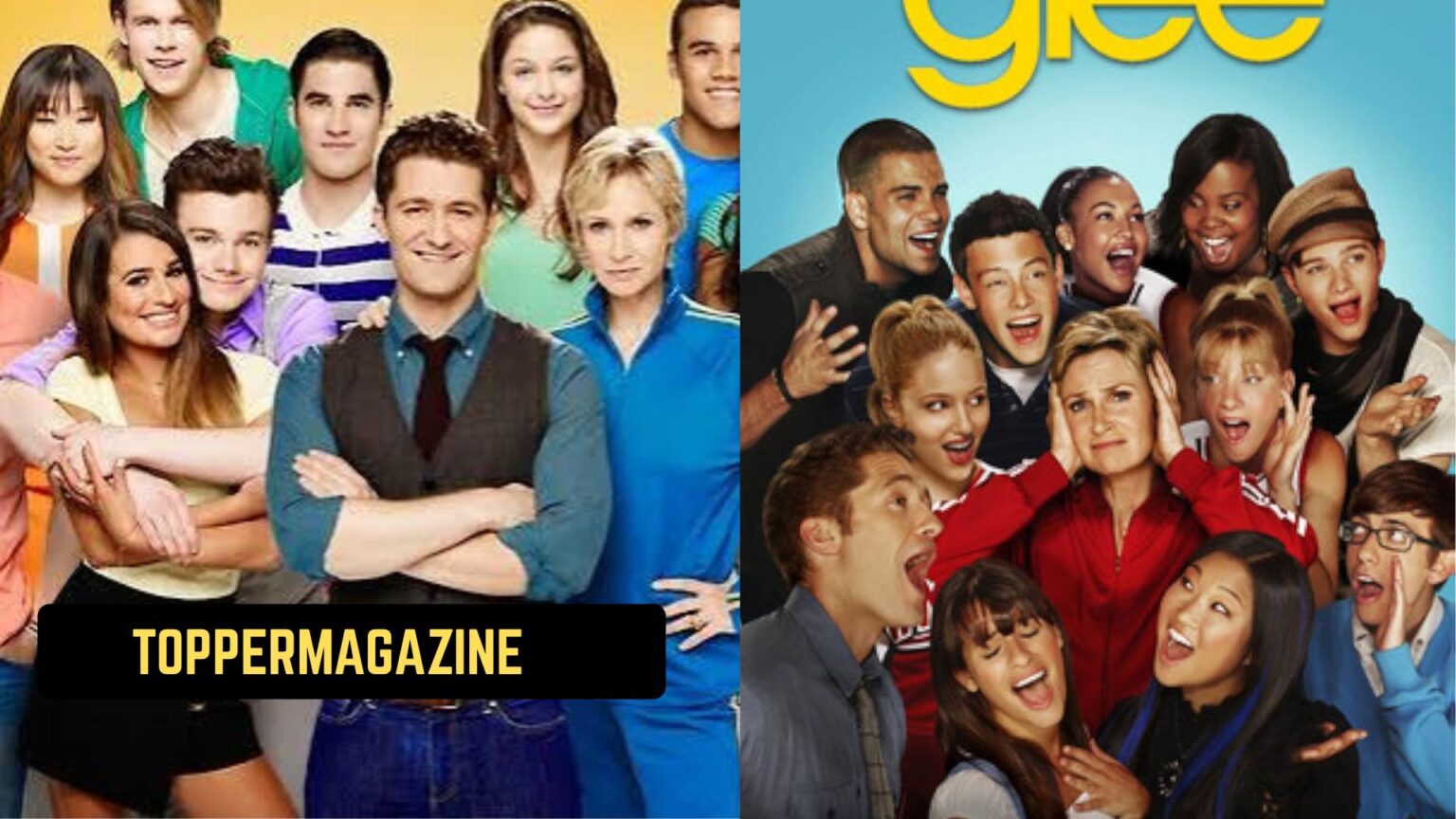
| Detail | Information |
|---|---|
| Show | Glee |
| Original Run | 2009–2015 |
| Main Setting | William McKinley High, Lima, Ohio |
| Creators | Ryan Murphy, Brad Falchuk, Ian Brennan |
| Main Cast | Lea Michele, Cory Monteith, Chris Colfer, Jane Lynch, Matthew Morrison, Naya Rivera, Amber Riley, Dianna Agron, Kevin McHale, Heather Morris, Jenna Ushkowitz, Mark Salling, Harry Shum Jr. |
| Genre | Musical comedy-drama |
| Network | Fox |
| Emmy Record | 40 nominations, 6 wins |
| Golden Globe Record | 10 nominations, 4 wins |
| Ensemble Achievement | SAG Award for Comedy Ensemble |
| Current Locations | Vary by cast member |
| Marriage Details | Different for each cast member |
| Individual Net Worth | Varies and is not uniformly verified |
Glee ran on Fox from 2009 through 2015.
Who Were the Glee Cast?
The Glee cast was an unusually broad acting ensemble.
Many performers also had serious musical or theater experience.
The central group included several standout performers.
- Lea Michele played ambitious singer Rachel Berry.
- Cory Monteith played football player Finn Hudson.
- Chris Colfer played expressive student Kurt Hummel.
- Naya Rivera played Santana Lopez.
- Amber Riley played powerhouse vocalist Mercedes Jones.
- Kevin McHale played Artie Abrams.
- Dianna Agron played cheerleader Quinn Fabray.
- Heather Morris played Brittany Pierce.
- Jenna Ushkowitz played Tina Cohen-Chang.
- Harry Shum Jr. played dancer Mike Chang.
- Jane Lynch played Sue Sylvester.
- Matthew Morrison played teacher Will Schuester.
The Screen Actors Guild’s cast record confirms many of these roles.
The Cast Was More Than a Singing Group
One overlooked detail is the show’s casting challenge.
Actors needed several skills at once.
They needed to act, sing, dance, and look youthful.
The Television Academy documented this unusual casting requirement in 2009.
That combination shaped the show’s distinctive identity.
The performers could carry dialogue scenes and musical performances.
How Glee Changed Television
Glee was not simply another teen drama.
It made musical storytelling central to weekly television.
The story followed New Directions, a struggling school choir.
Students faced friendship, identity, romance, bullying, and ambition.
The series also pushed LGBTQ representation into mainstream entertainment.
The Television Academy describes its representation as boundary-breaking.
Characters were often imperfect and emotionally complicated.
That helped audiences connect beyond the musical performances.
The show’s success also changed how television used music.
Songs became part of the show’s weekly cultural conversation.
Glee Cast and Its Major Breakthroughs
The ensemble quickly moved from television newcomers to major awards contenders.
The Television Academy lists 40 Emmy nominations and six wins.
The show received an Outstanding Comedy Series nomination in 2010.
Lea Michele also received a lead-actress nomination that year.
Jane Lynch delivered one of the show’s biggest individual successes.
She won the 2010 Emmy for supporting comedy actress.
Chris Colfer also earned an Emmy supporting-actor nomination.
His Kurt Hummel became one of the show’s defining characters.
Golden Globe Success
The Golden Globes recognized Glee very early.
The show earned 10 nominations and four wins.
Its victories included Best Television Series, Musical or Comedy.
Jane Lynch and Chris Colfer also won acting awards in 2011.
Lea Michele and Matthew Morrison received multiple acting nominations.
These results showed the cast had industry credibility.
The success extended beyond teenage audiences.
The Glee Cast as an Ensemble
The ensemble itself became a major strength.
The cast won the Screen Actors Guild Award for comedy ensemble.
The official SAG record lists the large ensemble and their characters.
That award matters because it recognizes collective performance.
It was not based on one star carrying the show.
The ensemble included performers with different backgrounds and strengths.
Some had Broadway experience, while others excelled in dance.
This mixture gave the series unusual flexibility.
It could shift focus without abandoning its musical foundation.
What Happened to the Main Glee Stars?
The cast followed very different career paths after the series.
Lea Michele
Lea Michele continued working in television and musical theater.
Before Glee, she had already built Broadway experience.
The Television Academy notes her roles in Les Misérables, Ragtime, and Spring Awakening.
Rachel Berry therefore became an extension of her musical background.
Her career was never limited to television acting.
Jane Lynch
Jane Lynch entered Glee with an established acting career.
Sue Sylvester became one of her most recognizable characters.
She continued working across television, film, and comedy.
Her later credits include The Marvelous Mrs. Maisel and The Good Fight.
Chris Colfer
Chris Colfer became strongly associated with Kurt Hummel.
The role earned him major awards recognition.
He won the 2011 Golden Globe for supporting actor.
His career later expanded beyond acting.
He became known for writing as well.
Matthew Morrison
Matthew Morrison brought substantial musical-theater experience.
Will Schuester placed him at the center of the show’s adult storyline.
He received two Golden Globe acting nominations for Glee.
His career has continued across stage, television, and entertainment projects.
An Important Privacy Note
The Glee cast includes many different individuals.
Therefore, marriage and family details cannot be combined accurately.
Some cast members have publicly discussed their relationships.
Others keep their private lives away from media coverage.
Likewise, individual net worth figures are often estimates.
They are not reliable unless supported by documented financial records.
For that reason, this article avoids presenting speculative wealth figures.
Unverified family claims are also excluded.
That approach is especially important for celebrity biographies.
Public information should not become an excuse for speculation.
The Lasting Legacy of the Glee Cast
The most interesting part of Glee is its ensemble model.
The series did not depend on one performer.
Instead, it created a rotating collection of personalities.
Each character brought a different voice and performance style.
The show also demonstrated the commercial power of television music.
Its songs became an important part of its success.
The Television Academy records also show impressive technical recognition.
Awards covered casting, directing, sound, music, and performances.
That broader recognition explains Glee’s cultural staying power.
Its legacy extends beyond nostalgia for 2000s television.
Final Thoughts
The Glee cast became one of television’s most recognizable ensembles.
Its members combined acting, singing, dancing, and theatrical performance.
The series also opened doors for several young performers.
Others used the show to expand already established careers.
Its strongest achievement was creating a genuine ensemble identity.
Years after its finale, that remains Glee’s defining feature.
Sources
- Television Academy — Glee awards and nominations
- Golden Globes — Glee awards record
- Screen Actors Guild — Glee cast and ensemble award
- Television Academy — Casting the Keys to Glee
- Television Academy — Glee and LGBTQ representation
Read more:Dorothée Lepère: The Private Life Behind the Pinault Name