

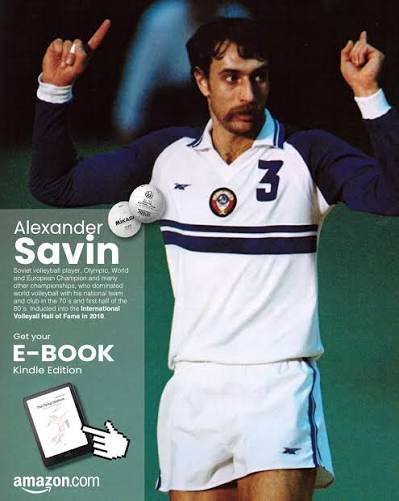
Alexander Savin biography is closely tied to one of the defining eras of Soviet volleyball. Born on July 1, 1957, in Taganrog, Savin became an Olympic medalist, world champion, and International Volleyball Hall of Fame inductee.
His sporting story reached its biggest stage twice. He won silver with the Soviet Union at the 1976 Montreal Olympics. Four years later, he returned to win gold at the 1980 Moscow Games.
His memoir, The Flying Elephant: Memoirs of an Olympic Champion, gives that career a more personal dimension. The book looks beyond medal tables. It explores the athlete behind them.
Alexander Savin at a Glance
| Detail | Information |
|---|---|
| Full Name | Aleksandr Borisovich Savin |
| Date of Birth | July 1, 1957 |
| Place of Birth | Taganrog, Russia |
| Nationality | Soviet / Russian |
| Key Profession | Volleyball Player and Coach |
| Playing Position | Indoor Volleyball Player |
| Olympic Record | Silver, 1976; Gold, 1980 |
| Hall of Fame | International Volleyball Hall of Fame, 2010 |
The International Volleyball Hall of Fame confirms Savin’s birth date, birthplace, Olympic record, and 2010 induction.
From Taganrog to the Volleyball Court
Savin was born in Taganrog during the Soviet era. His later career would take him far beyond his birthplace.
Available biographical records connect his development with Obninsk. There, he entered organized volleyball and began building the physical and technical foundation for elite competition. Contemporary accounts also identify Vladimir Pitanov as an important early coach in his development.
Volleyball suited Savin’s unusual physical gifts.
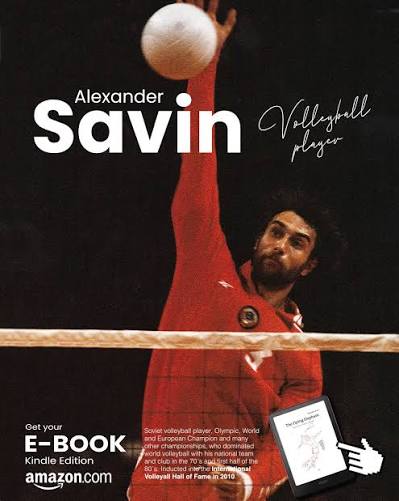
He became known for his ability around the net. His height and jumping ability created a difficult matchup for opponents. A 1981 Washington Post report, quoting earlier Volleyball Magazine coverage, described Savin as an exceptional Soviet player and highlighted his unusual leaping ability.
That description helps explain the unusual “Flying Elephant” imagery associated with his story.
He was a large athlete.
Yet he could rise quickly above the net.
That combination became part of his identity as a player.
His development also coincided with a powerful Soviet volleyball system. National teams received intensive preparation. Clubs produced players for international competition. Savin eventually became part of CSKA Moscow’s volleyball tradition and the Soviet national team structure.
The environment was demanding.
International volleyball offered little room for inconsistency.
Savin’s early career therefore became a lesson in repetition. Training had to become instinctive. Physical strength had to work with timing. Individual talent had to fit the team’s tactical system.
That final point mattered greatly.
Volleyball is rarely about one player alone.
A powerful attacker still needs a setter. A blocker needs positioning. A national team needs trust between players who may spend months together.
Savin’s later memoir gives this team environment greater importance. Current descriptions of the English edition emphasize training camps, teammates, Olympic competition, and the culture surrounding Soviet volleyball.
The Olympic Journey That Defined Alexander Savin
Savin reached the Olympic stage at Montreal in 1976.
He was part of a Soviet team entering the tournament with serious expectations. The team had already established itself among the world’s strongest volleyball nations.
The Soviet side moved through pool play successfully. Savin played all five matches. The team then defeated Cuba in the semifinal.
The final brought Poland.
It became a five-set battle.
Poland eventually won 3–2.
Savin left Montreal with an Olympic silver medal.
For an athlete still establishing himself internationally, the experience was enormous. Yet the result also created another objective.
Four years remained until Moscow.
The Soviet team used that period aggressively.
Savin collected major international honors during the next stage of his career. The Soviet Union won the 1977 European Championship. It also won the 1977 FIVB World Cup and the 1978 FIVB World Championship. Savin was part of those successful teams.
The European title returned in 1979.
Then came Moscow.
The 1980 Olympic Games were different from Montreal. The Soviet Union was hosting the event. Political tensions also surrounded the Games, with numerous nations boycotting the competition.
Inside the volleyball tournament, however, the Soviet team had a clear target.
Gold.
The Soviets opened with a 3–1 victory over Czechoslovakia. They then defeated Italy, Bulgaria, and Cuba during pool play. Savin played all six matches.
The semifinal brought Romania.
The Soviet team won.
Then came Bulgaria in the final.
The Soviets won 3–1.
Savin became an Olympic champion on home soil.
That victory completed a remarkable Olympic progression.
1976: Olympic silver.
1980: Olympic gold.
His wider international record was equally significant. The International Volleyball Hall of Fame records his Olympic medals alongside a 1978 World Championship gold and a 1977 World Cup gold.
Savin continued competing internationally after Moscow.
His career remained connected with the Soviet team’s major tournament success. Records associate him with additional World Cup and World Championship victories in the early 1980s.
The period explains why his career still attracts interest.
He was not simply part of one successful Olympic squad.
He belonged to a generation that dominated international volleyball.
What The Flying Elephant Adds to His Story
Medal records tell only one part of Savin’s life.
The Flying Elephant: Memoirs of an Olympic Champion shifts attention toward the experience behind those results.
Current listings and coverage describe an English-language edition of the memoir. Reports identify the book as a substantial volume of about 514 pages, with more than 240 photographs.
The photographs add historical value.
They place the reader inside a period when Soviet volleyball carried enormous international importance.
The memoir also focuses on people.
Coaches.
Teammates.
Training partners.
Competitors.
Those relationships matter because elite volleyball is deeply collective.
The book therefore works as both a personal sports memoir and a record of Soviet-era volleyball culture.
Its value does not come only from Savin’s Olympic gold.
It comes from his perspective as someone who lived through the system.
Readers can see how an athlete’s career develops over years. Olympic success appears as the result of preparation rather than a single magical moment.
The title itself captures an unusual contradiction.
An “elephant” suggests size and power.
“Flying” suggests movement and elevation.
That contrast reflects the visual quality of Savin’s playing style. Contemporary reporting specifically highlighted his ability to get unusually high above the volleyball net.
For volleyball historians, the memoir also preserves memories from a sporting generation that is becoming increasingly distant.
Life After the Playing Years
Savin’s sporting career did not end with his Olympic medal.
He later moved into coaching.
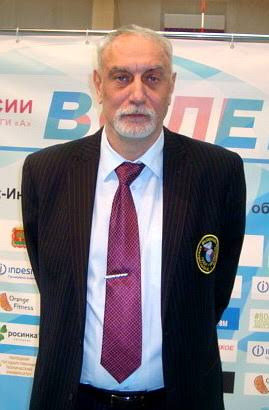
Available career records associate him with coaching positions in Moscow and elsewhere in Russia. Sources report coaching work with Spartak Moscow during the 1990s and later with Samotlor Nizhnevartovsk.
That transition gave him another perspective.
A player experiences the game from inside the court.
A coach sees the entire structure.
Training methods become different.
So does responsibility.
Instead of controlling his own performance, a coach must develop other players. That requires communication, patience, tactical thinking, and long-term planning.
Savin’s later career therefore adds another layer to his biography.
He was both competitor and teacher.
His achievements eventually received major international recognition.
In 2010, he was inducted into the International Volleyball Hall of Fame as a male indoor player. The Hall’s official biography records the honor and summarizes his Olympic and international career.
That induction also placed Savin among volleyball’s historically recognized figures.
His legacy now exists in two forms.
One is statistical.
Olympic medals. World titles. International championships.
The other is personal.
A memoir preserves the experiences behind those numbers.
That makes The Flying Elephant especially relevant for readers interested in sports history. It offers a route into a period when volleyball, politics, national identity, and elite training were closely connected.
Lessons From Alexander Savin’s Journey
- Long preparation matters: Olympic success followed years of disciplined training.
- Failure can redirect ambition: Montreal silver preceded Moscow gold.
- Teamwork drives volleyball: Individual talent needs collective execution.
- Legacy needs preservation: Memoirs can protect sporting memories for later generations.
This biography is compiled from publicly available records, institutional profiles, historical reporting, and published information about Savin and his memoir. It is intended solely for educational and informational purposes. Where detailed private-life information is not independently verified, it has been omitted rather than presented as fact.